Home Authors Books Subjects Events Software Features Links Newsletter Gifts Blog Write Review What's New


BOOK REVIEWS

AUTHORS

STUFF

TAKE PART

NEWS


Want to be a reviewer?


Are you:
A published popular science author?
A popular science publisher?
A science magazine?
A science-based organization?
A school, college or university?
An unpublished author?

Click on the relevant link above to find out how we can help you.


Featured author:
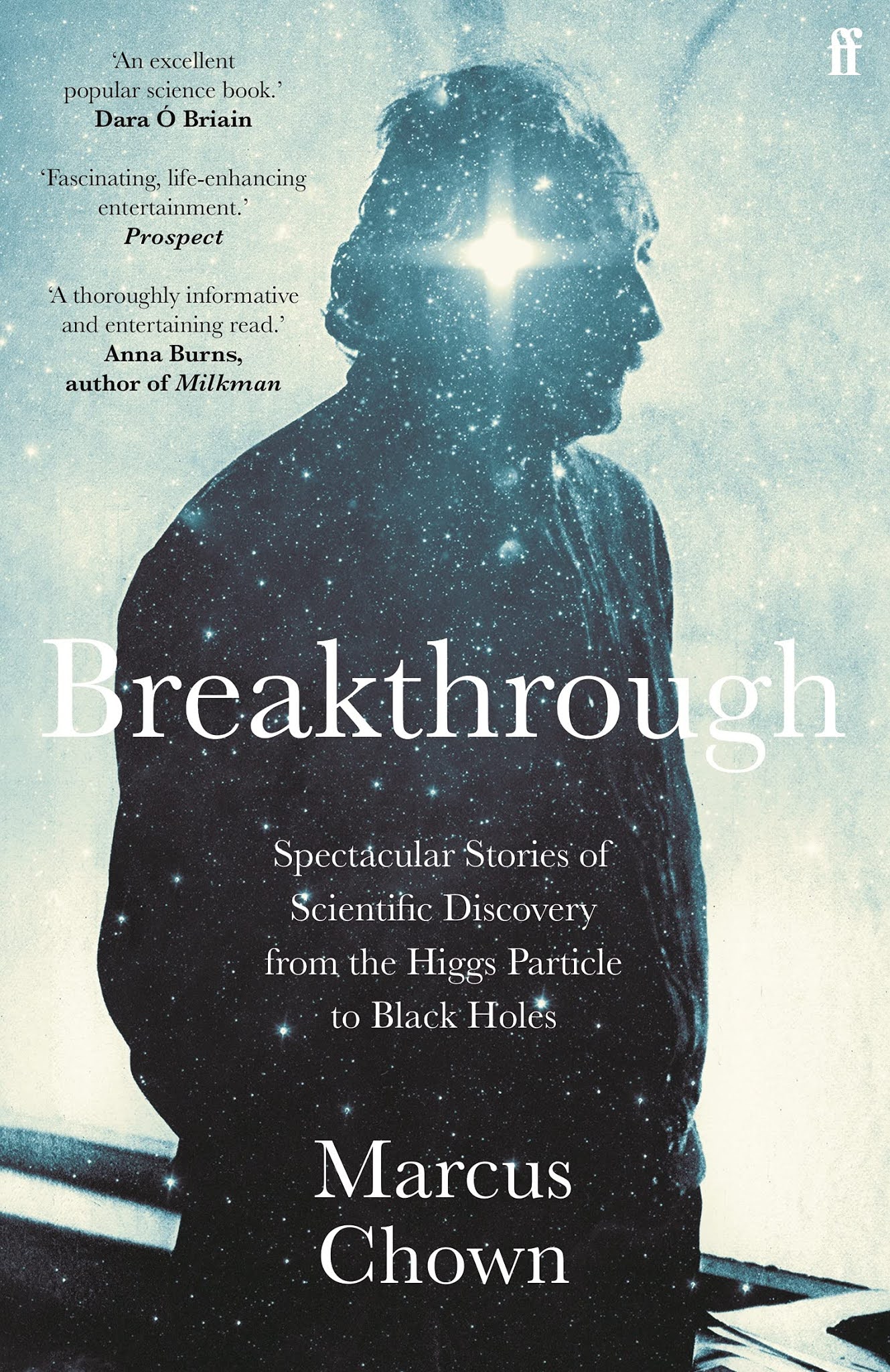
Marcus Chown

Marcus Chown picture


IT Tested: this site has been tested by independent-testers.org

Whisper it: science can be dull. But it doesn't have to be.

Celebrate the best that science writing has to offer on a site totally dedicated to popular science books and authors.


Win the Royal Society Longlist!

This year's Royal Society Prize for Science Books contains some exciting books - and one UK-based subscriber to our newsletter will win a copy of every book on the list, courtesy of the Royal Society. All you have to do is sign up for our free newsletter (below). We will make a draw at noon GMT on 15 September 2009, the date the winner of the Prize is announced. If you are already on the list, no need to sign up again - you will automatically be entered. (See full terms and conditions.) Unfortunately, due to restrictions from our sponsor, we can only offer this prize to newsletter subscribers with a UK address.

Newsletter

Want to keep up to date? It's easy to sign up for our free newsletter. It's free, informative and (like the best popular science) always readable.


Your Name
Your Email Address
Country (optional)
Image Verification
Please enter the text from the image
[ Refresh Image ] [ What's This? ]

Privacy Information
Information collected above will only be used to send out email updates. It will not be passed on to any third party. See our full privacy statement for more details. You can unsubscribe at any time - details in every newsletter.


Sponsor us without paying a penny

Use any link from this site to Amazon (you don't have to buy the item the link is for) - or one of these links: Amazon.com or Amazon.co.uk. Amazon will give us a small contribution at no charge to you.


Featured Book

Atomic: the first war of physics by Jim Baggott


Visit bookshop


The best popular science book of the year to date by far (April 2009), this is an epic journey through the development of atomic power and the atom bomb during the second world war.

It's a seriously chunky tome at nearly 500 pages, but for once this length is justified. It isn't padded out by repetition and rhetoric, this really is such a big story that it needs this kind of length.

It might seem there really isn't much of a story left to tell. What with Richard Feynman's superb reminiscences of the Manhattan Project and many, many books on that first real example of big science, you might be inclined to say 'what's new?' - but Jim Baggott more than pulls it off by covering not one, but four stories of the development of the terrifying power of the atom - in Germany, the US, the UK and the USSR.

He takes us back to the first concept that fission could produce a chain reaction and leads us through the gradually realization in the UK and then the US, that Germany could be building atomic weapons and this posed a huge threat. There's the dramatic raids on the heavy water plant in Norway, and lying underneath all the developments the growing network of spies, feeding information from the West to Russia. It's surprising how slow the US was to realize what was going on, and fascinating to see the political machinations across the Atlantic.

That's not all. We see the two pictures of what was going on in Germany, never totally rationalized. Were Werner Heisenberg and his fellow scientists just not up to the job, but trying hard to give the fatherland a super weapon, or (as they later rationalized), were they intentionally going slow on the development of a bomb? What's also amazing is how early the idea of deterrence came along - the great Danish physicist Niels Bohr suggesting the idea of the concept of atomic weapons being enough for deterrence well before they were built. Most remarkable of all, the way we nearly had a world organization giving everyone access to atomic power and with no one having nuclear weapons, an idea that came out of the US administration, but was scuppered by the more hawkish wing of the same group of people.

If the book has a weakness, it's the sheer volume of people involved. I lost track of some of the names and couldn't really care about many of them. As Baggott switches from location to location, I was sometimes a bit confused about where I was. One chapter, for instance, begins 'The work of the MAUD committee had proceeded apace through the last few months of 1940.' I was desperately trying to remember whose committee this was, in which country, and didn't discover until a couple of paragraphs later. There just is a huge amount of detail, and sometimes you need to let this flow over you and not worry too much about total comprehension.

This is an unparalleled book that should be on the shelf of anyone with an interest in the development of nuclear power, or how the Second World War was won. It really brings home how much this was the war of science. Here we see the nuclear weapons, but there was also the code cracking, particularly the Bletchley Park work, radar and the development of operational research all coming from science and playing their part. I'm not an enthusiast for books on the Second World War, but this one had me enthralled. Highly recommended.

Also in paperback from November 2009 (US is paperback): Visit bookshop

Review by Brian Clegg


Featured Children's Book

Your Planet Needs You by Dave Reay   age range 9-12 *


Visit bookshop

If there's one science subject that younger readers understand better than most adults (apart from programming a DVD recorder) it's climate change. It's a topic that interests them and they feel a natural urge to do something about it, so Dave Reay's excellent Your Planet Needs You should prove very popular.

With a fast-flowing mix of cartoon strip and text, interspersed with a flowing narrative (rather than in Horrible Science-like unrelated sections) it's a fast and breezy run through the key facts of climate change as we currently understand them. There's some graphic fun by interspersing the narrative with the homework of one of the main characters on green topics - my only slight concern about that is that the concept of homework might be such a turn-off that younger readers could skip over it.

Dave Reay knows his stuff as he showed in his adult book, Climate Change Begins at Home, and manages to put the green message across without being too patronising, or keeping to the easily solved problems.

I do think there are a few points missing, or that perhaps smack of slight political correctness. In addressing clean energy there is no mention of nuclear power (fission or fusion). There's also perhaps a little too much concentration on the little things we can do around the home, without any feeling for how relatively insignificant they are - and how we need worldwide government action if we are going to make any real headway. Then there are some rather dubious claims about the benefits of composting over landfill. And if I'm really fussy, cow farts are mentioned a lot, presumably for the kids-love-farts effect, despite being negligible compared to the burps.

However, this shouldn't obscure the fact that this is a book the readers will enjoy that gets across a good range of facts about climate change and what we can do to help in a clear, effective way. It should appeal equally in the classroom (it's very school-oriented) and the home.

Only in paperback

* Our age range recommendation is an estimated guide, but individual readers outside the range could still enjoy the book!


Featured Gifts

  Looking for a different present, or a gift for someone who's difficult to buy for? Take a look at this:

Gift review - New iPod Touch

Visit bookshop

I've never before rated an iPod above other MP3 players. They're really irritating, because they don't support Microsoft's WMA format, which means they have half the capacity of any other player. But the iPod Touch has won me over. It is just superb.

Its big, clear screen gives great visuals and sexy intuitive controls. The sound is excellent, and the ability to connect to a wireless internet means you can access the web from anywhere in the house (or a WiFi-enabled location like McDonalds).

Okay, it has a couple of limitations. I found the on-screen keyboard too small for my fingers, and because the screen is capacitative, you can't use a stylus, it has to be fingers. And there's still no WMA support, which means the cheapest touch can only take 2,000 songs. (Oh and you can't replace the battery yourself, which is poor design, and liable to illegal in Europe in a year or two.) But it's so lovely and fun to use. As long as you are young at heart (or just love a good gadget), nothing can do portable music better.

I'm sorry for sounding so gushing. I've always thought iPods were a triumph of style over substance, but the Touch is entirely a different matter.

If you desperately need more capacity, something cheaper or something smaller, the Creative Zen X-Fi is, without doubt, the next best thing - but try a Touch first. I defy you not to fall in love.

Also available in 16 Gb (4,000 songs):Visit bookshop Visit bookshop

Also available in 32 Gb (8,000 songs):Visit bookshop Visit bookshop

Gift category - special - costs around £160 for 8 Gb

Reviewed by Jo Reed

Google
Popular Science site
The Web


Looking for a different present? Take a look at our suggested gifts, all tested by Popular Science reviewers.


Featured author/ editor of the Popular Science site: Brian Clegg

Brian Clegg picture

Follow Brian on Twitter


The future of reading or techno-hype?

Check out Amazon's Kindle 2 electronic book


Click here for 2009 information on the world's most prestigious science book prize.

Previous results:


Need a feed?

Our latest reviews, features and events are highlighted in an RSS newsfeed.


Add to My Yahoo
Add to My MSN

Interested in children's books? We've a feed for that too:


Add to My Yahoo
Add to My MSN

Not sure what this all about? Find out more about RSS and our feed.


Featured author:
Simon Singh


Any queries or comments? Contact us by clicking here.


DISCLAIMERS

This site has no connection with Popular Science magazine or other sites and publications with a similar name.

Much of the content of this site is written by popular science writers or friends of popular science writers. Inevitably many of the reviews in such a small community are written by or about someone we know. We always aim to be impartial in our reviews, but there is a connection which we need make clear, as there is no intention to deceive. The content of any review or article is solely the opinion of the author and should not be read or understood on any other basis. The site exists to promote popular science writing and popular science authors and for this reason should be considered promotional material, just as the editorial reviews in an online bookshop or the blurb on the back of a book should be considered promotional.

The website should not be eaten or used where it can come into contact with water.

Contact us at info@ popularscience.co.uk - have your say!

Part of the Popular Science  site

Copyright © Creativity Unleashed Limited 2005
Last update 24 February 2007

Creativity Unleashed Limited                 Registered in Wales No 3064978             Registered address – 2 Church Street, Burnham, Bucks. SL1 7HZ